Lorcan Walshe (b.1952) is an Irish artist living and working in Dublin. He trained at the Sligo School of Art and the National College of Art and Design, Dublin. Walshe held his first solo exhibition in The Peacock Theatre Gallery, Dublin in 1982. He has exhibited widely in a solo capacity and as part of group exhibitions both in Ireland and abroad; including Contemporary Irish Artists exhibition at Syracuse University, U.S.A. (1991) and Sense of Ireland Festival, London. U.K. (1990).
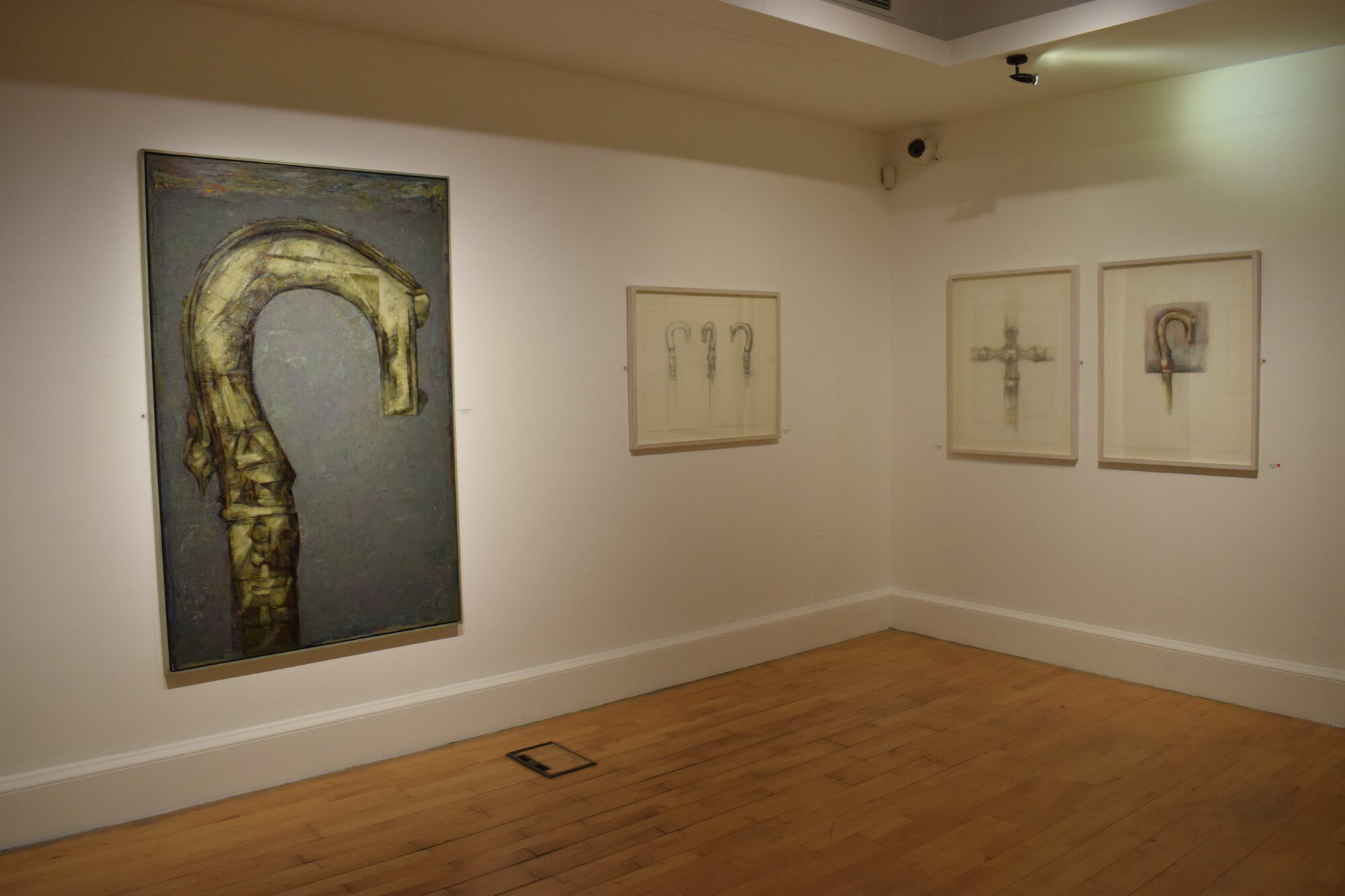
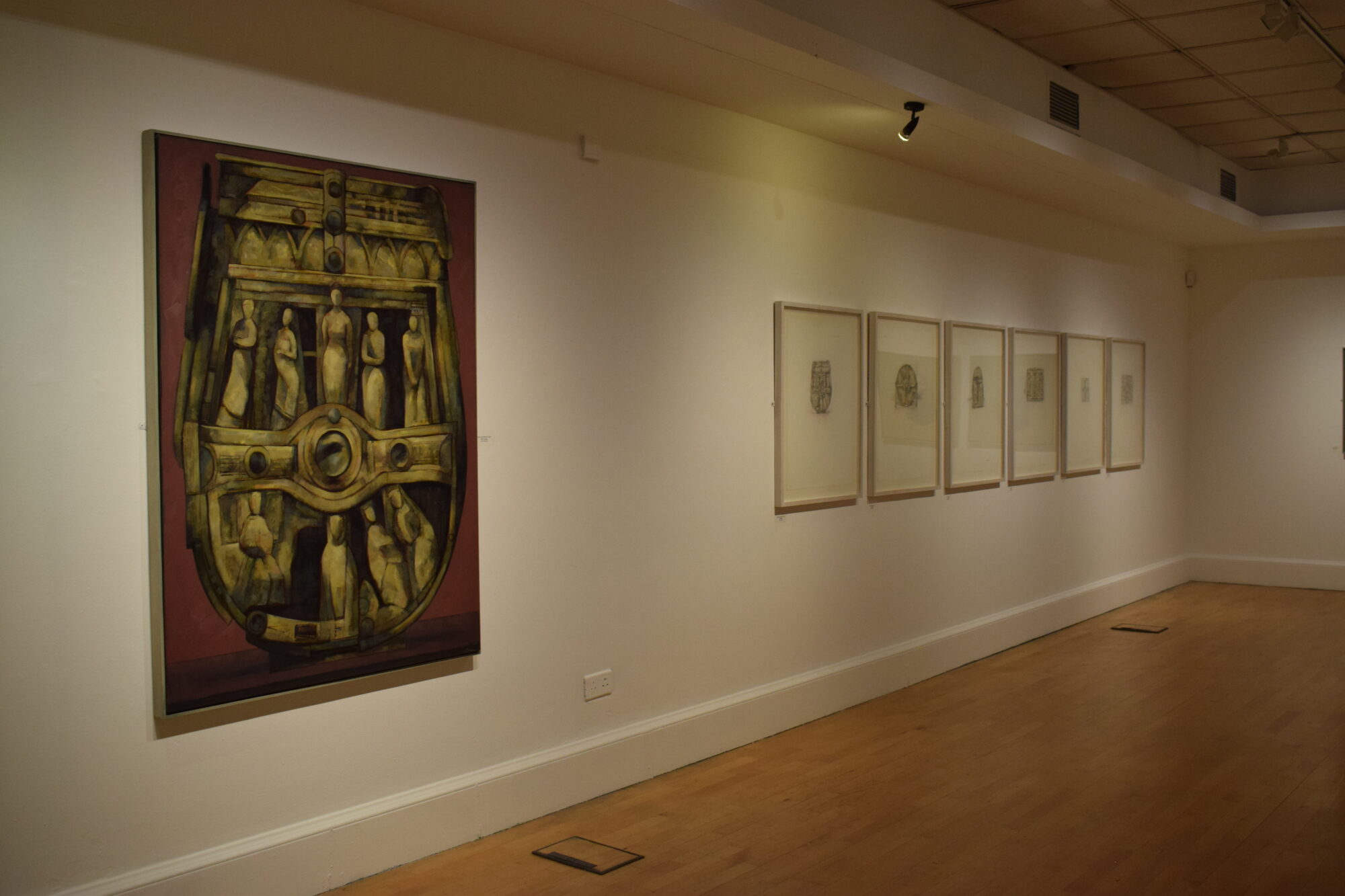
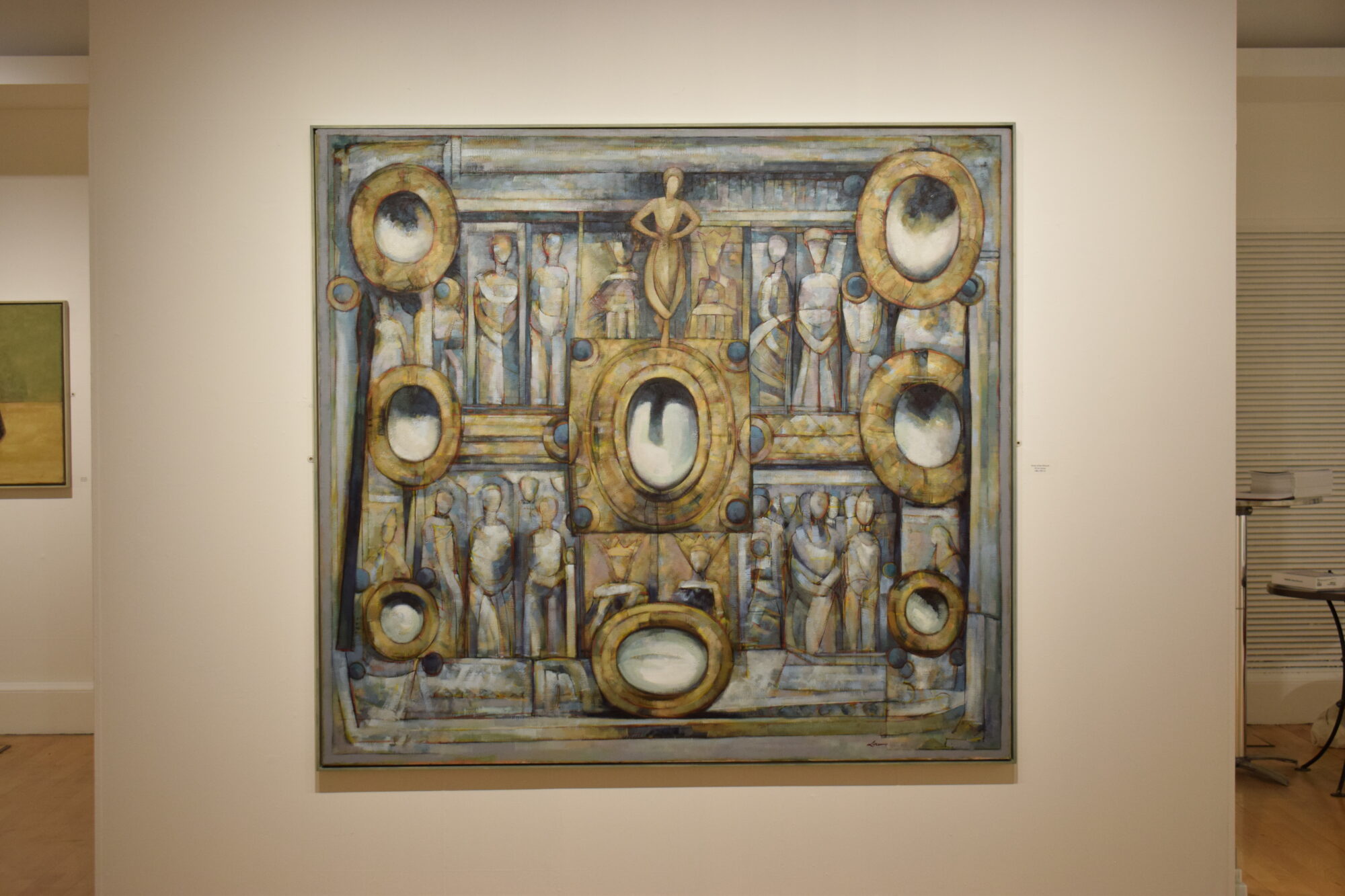
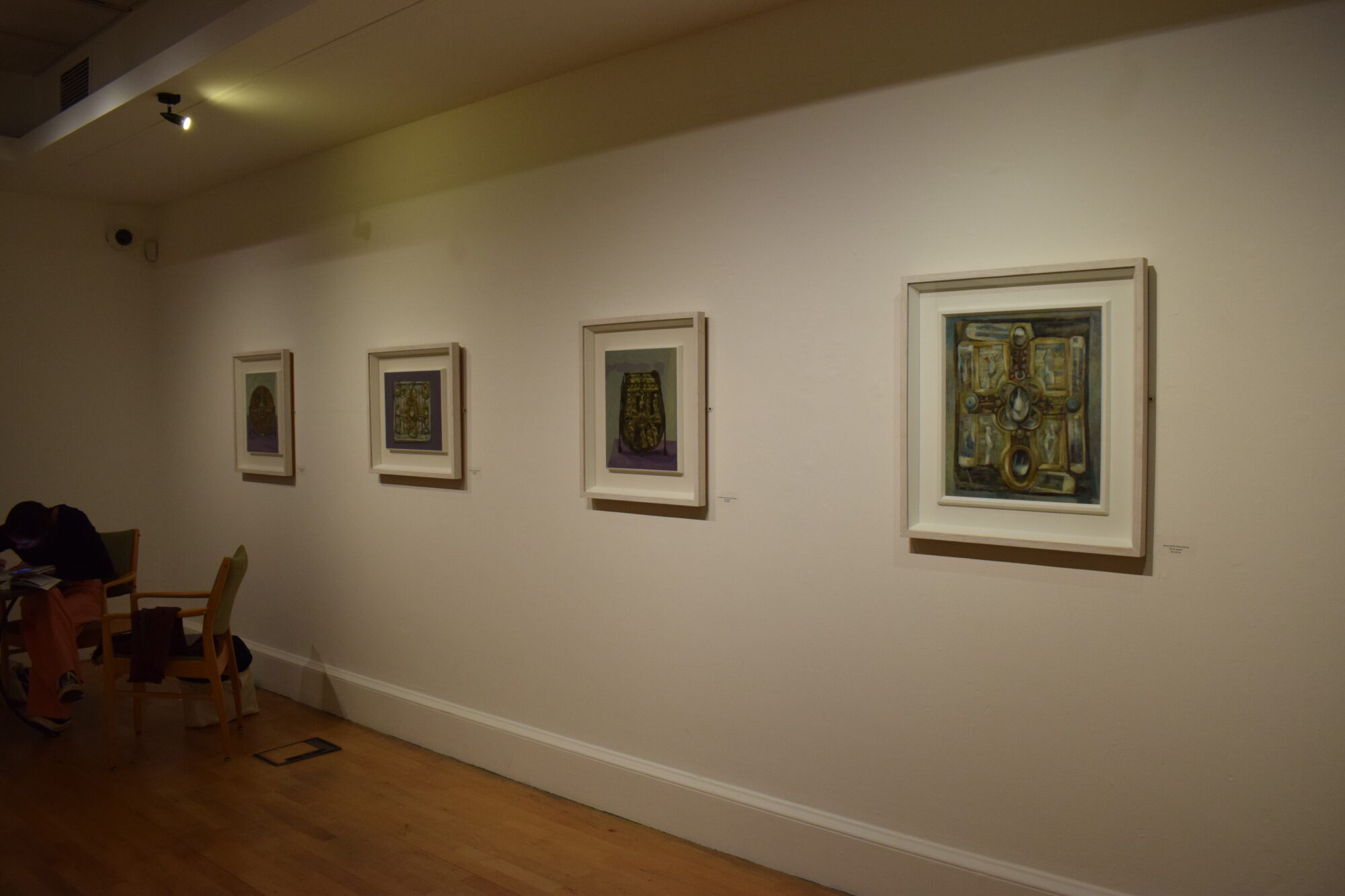
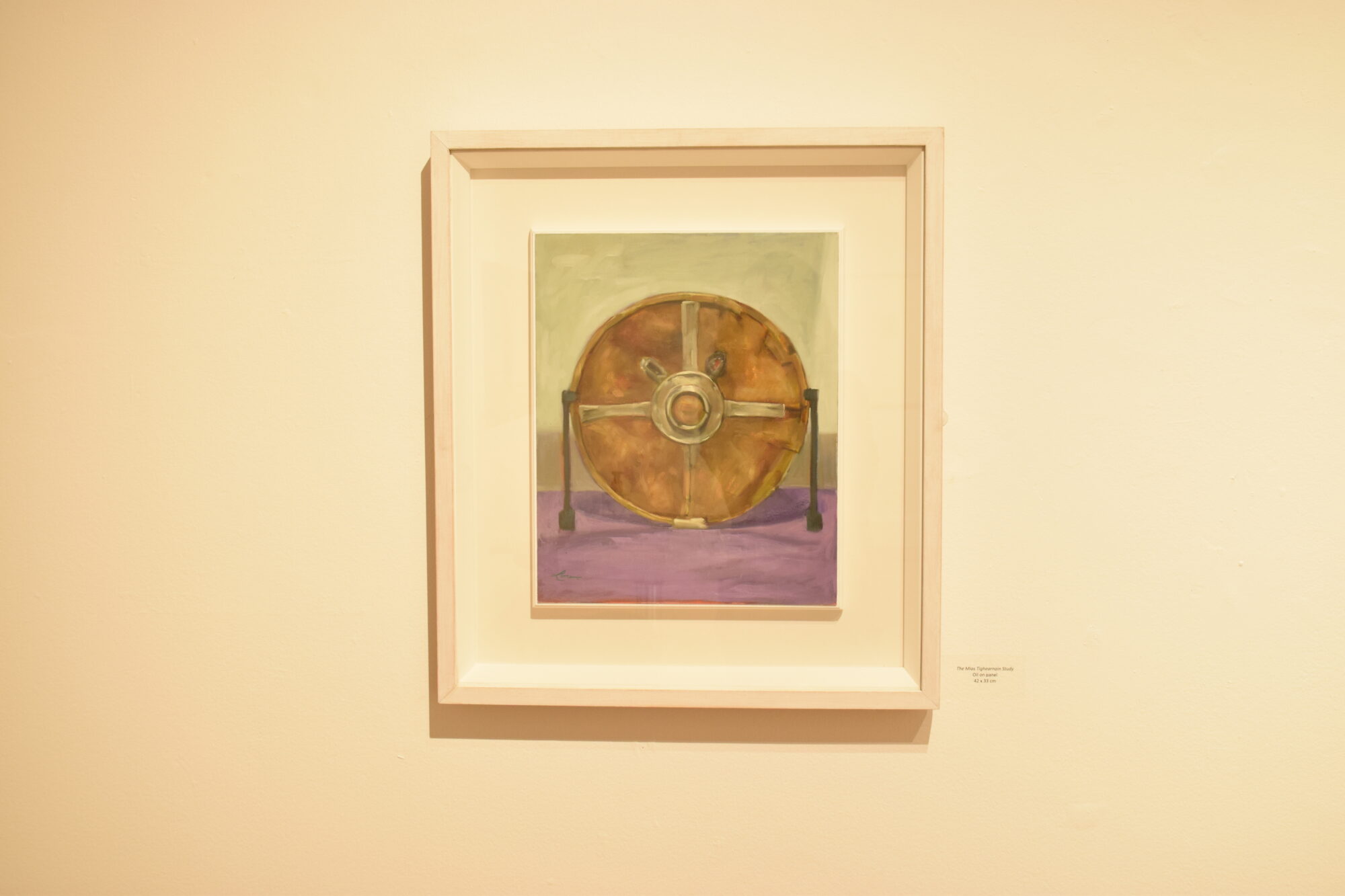
The Artefacts Project at the Hunt Museum was a fresh take on an exhibition of the same name displayed at the National Museum of Ireland, Collins Barracks, in 2007. The exhibition showcased Walshe’s interest in Irish Medieval artefacts and how they exemplify Irish indigenous culture. These paintings and drawings are the result of Walshe’s search for artistic roots, finding them in the art and craftsmanship of Ancient Ireland. The era of the Celtic Revival had long since passed when Walshe set out on this quest, however its concept chimes with the way in which he sought to connect with Gaelic civilisation and Ireland’s ancient indigenous art.
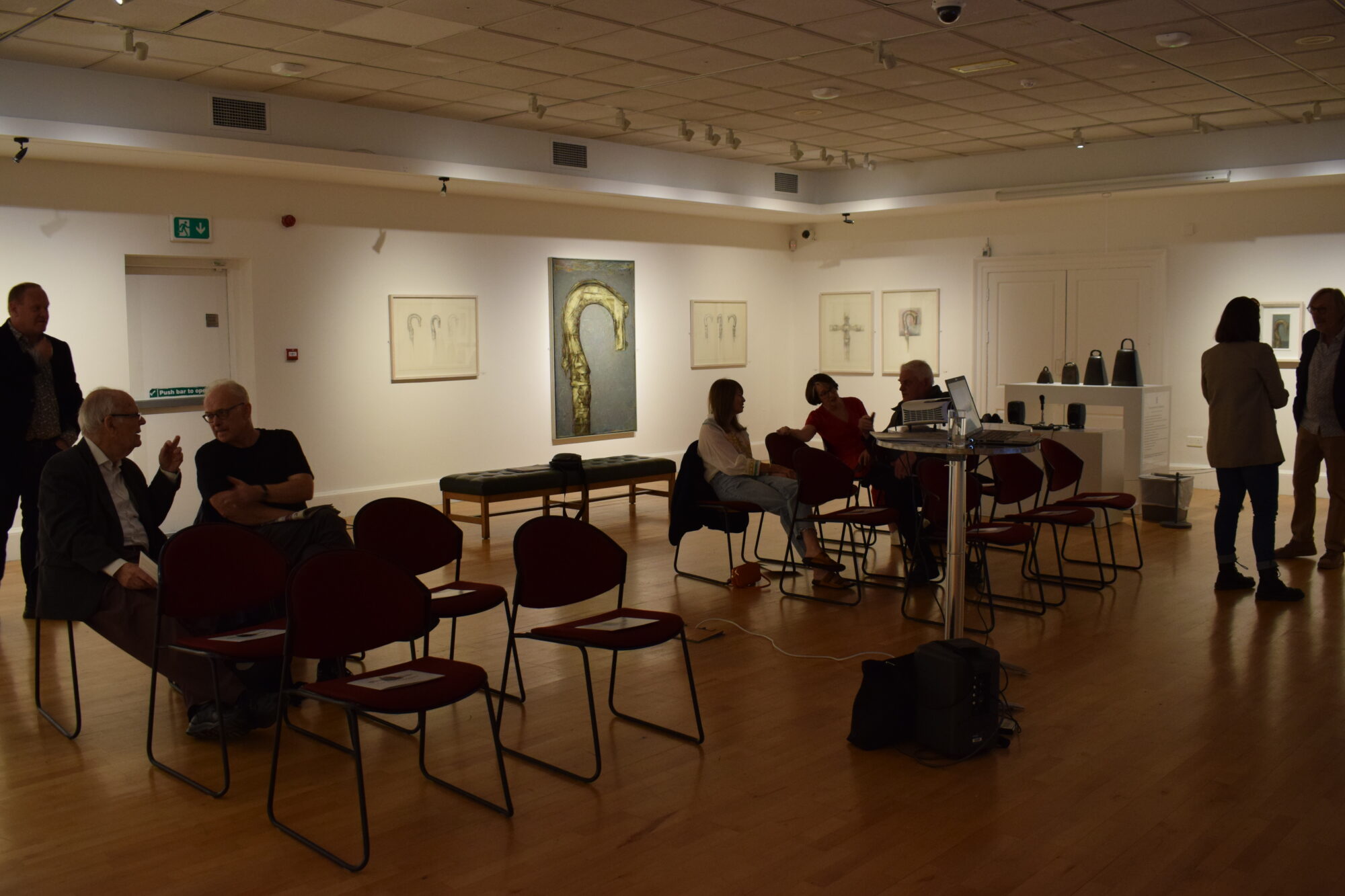
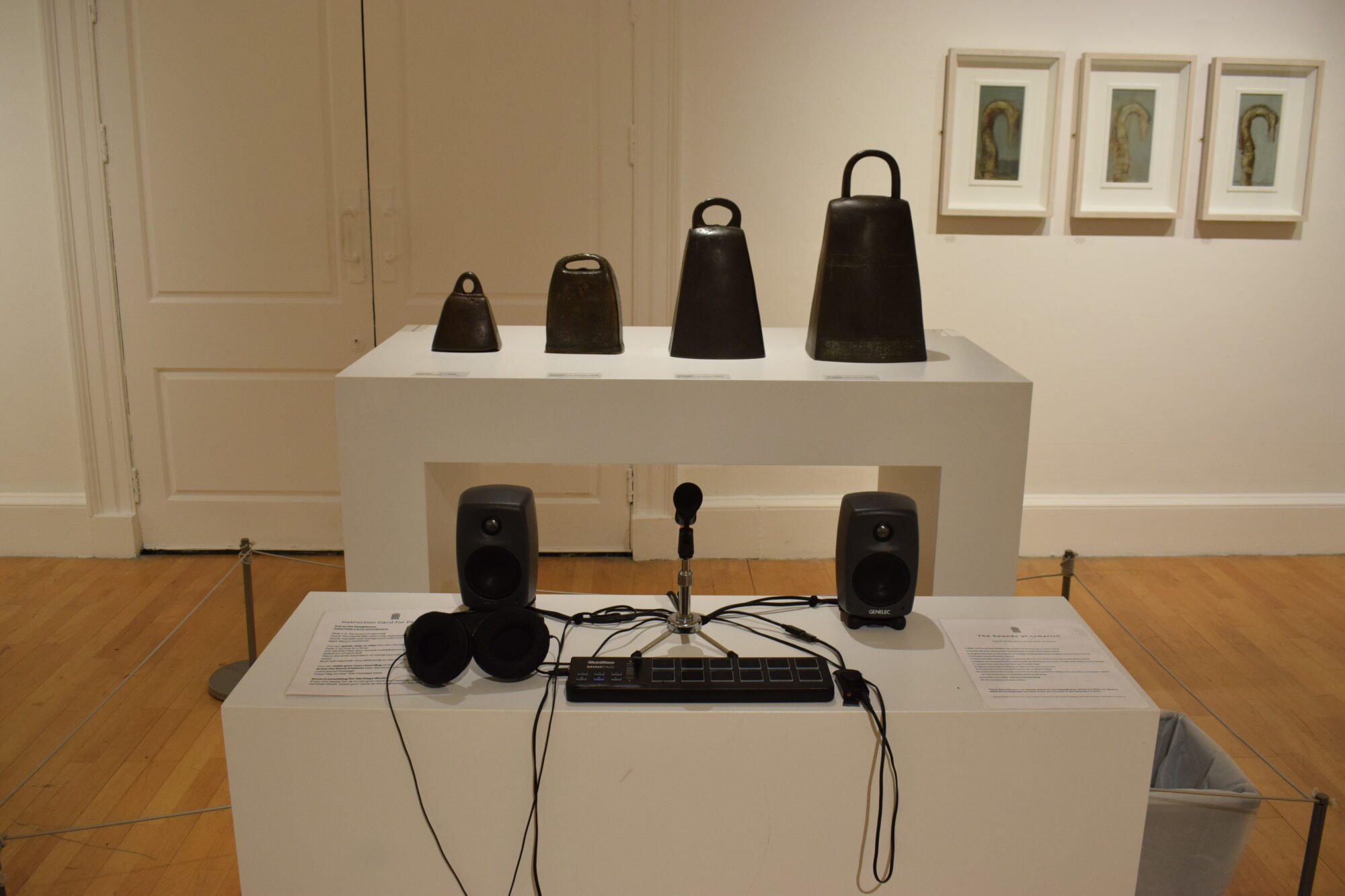
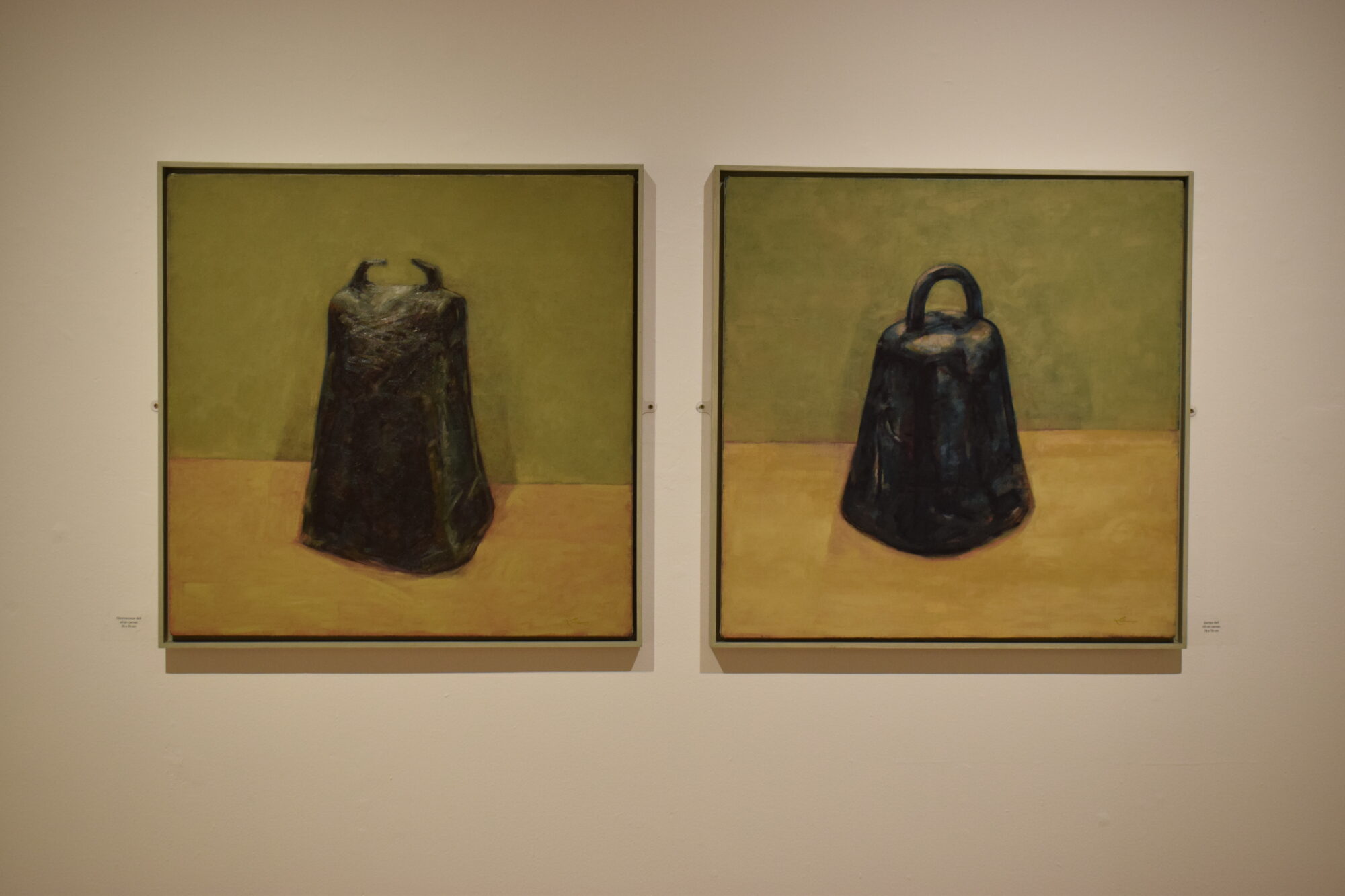
In the spirit of the past being always present, the Hunt Museum incorporated the Irish Bronze Handbells from the permanent collection into this exhibition. The Bells would ring on the hour, with the sounds of Limerick played through the sound created by each bell. Visitors were invited to record their own voices as they would be heard through the bells.
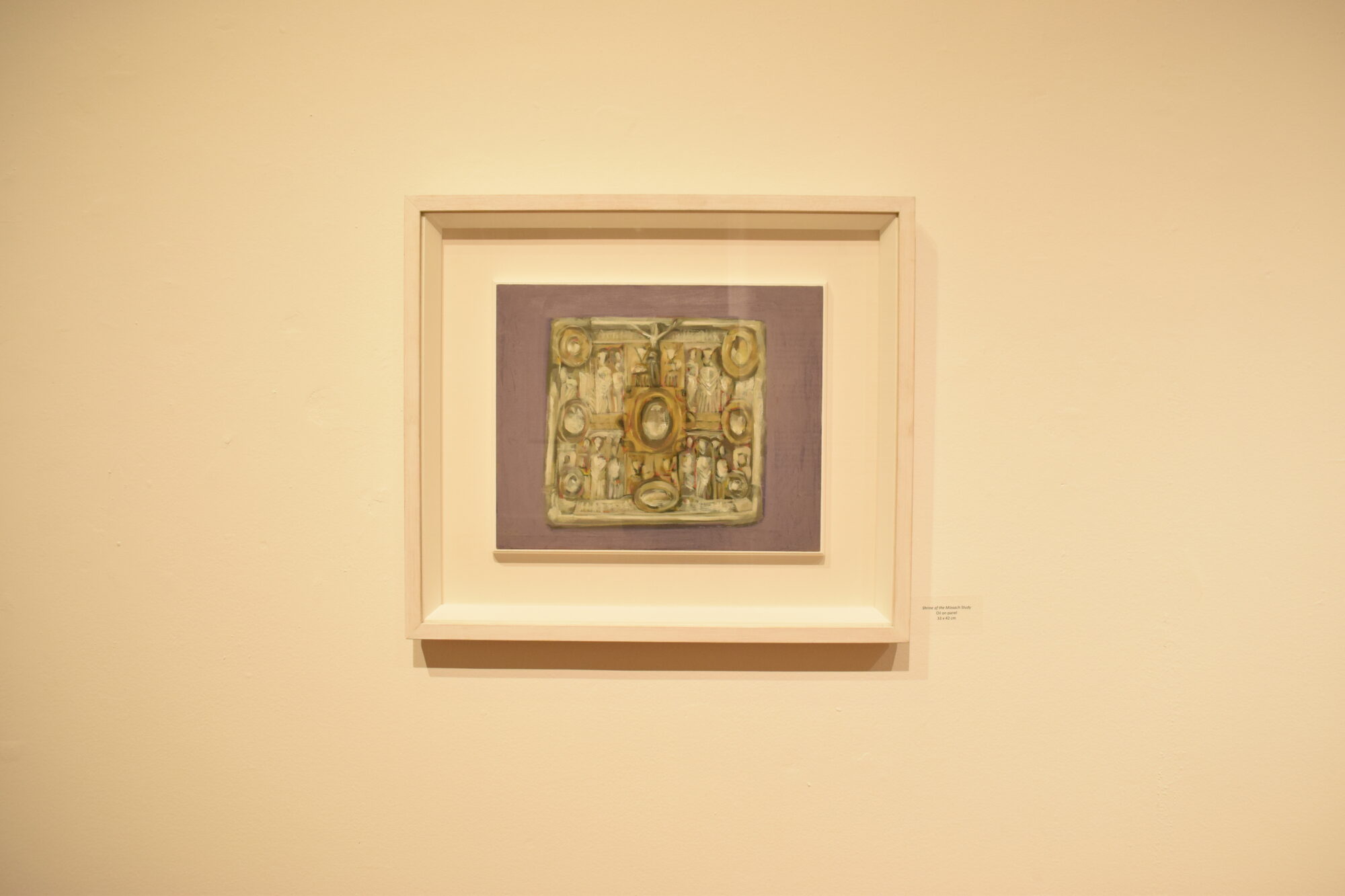
Medieval objects such as Shrines were often embellished with semi-precious stones centuries after they were initially created, augmenting their appearance. Walshe has followed this tradition by updating his works years after their creation. This can be seen in The Shrine of the Miosach where he replaced the Medieval crucifixion image with a female presence reminiscent of Brigid, the High Priestess of pre-Christian Ireland.
Sources drawn from essays in the NMI Catalogue | The Artefacts Project 2007

Art gallery room with minimalist paintings on white walls. Left: Large abstract portrait with earthy tones. Right: Three smaller abstract drawings. Calm atmosphere. Art exhibit featuring five dark, bell-shaped sculptures on a white pedestal with headphones and speakers in the foreground, creating an interactive sound experience. Art gallery interior with warm lighting. A prominent abstract painting in brown tones hangs on the left wall, with a series of smaller, detailed sketches on the right. Elegant and contemplative ambiance. Abstract art on display in a gallery features a square canvas with textured, rectangular patterns and circular motifs in muted blue and gold tones. Two framed paintings depict black handbags against a muted green background. Each bag rests on a wooden surface, conveying a sense of stillness and simplicity. Art gallery with four abstract paintings in white frames on a beige wall. Wooden floor and subdued lighting create a calm, contemplative atmosphere. A framed piece of abstract art hangs on a beige wall. The artwork features a central object with intricate patterns in muted tones, evoking a contemplative mood. Framed artwork on a beige wall features a circular, earth-toned pattern against a green background, above a purple stripe. The mood is calm and contemplative.
Lecture Series | Challenging the dominance of words in post-colonial Ireland: The Visual Language of Lorcan Walshe’s The Artefacts Project
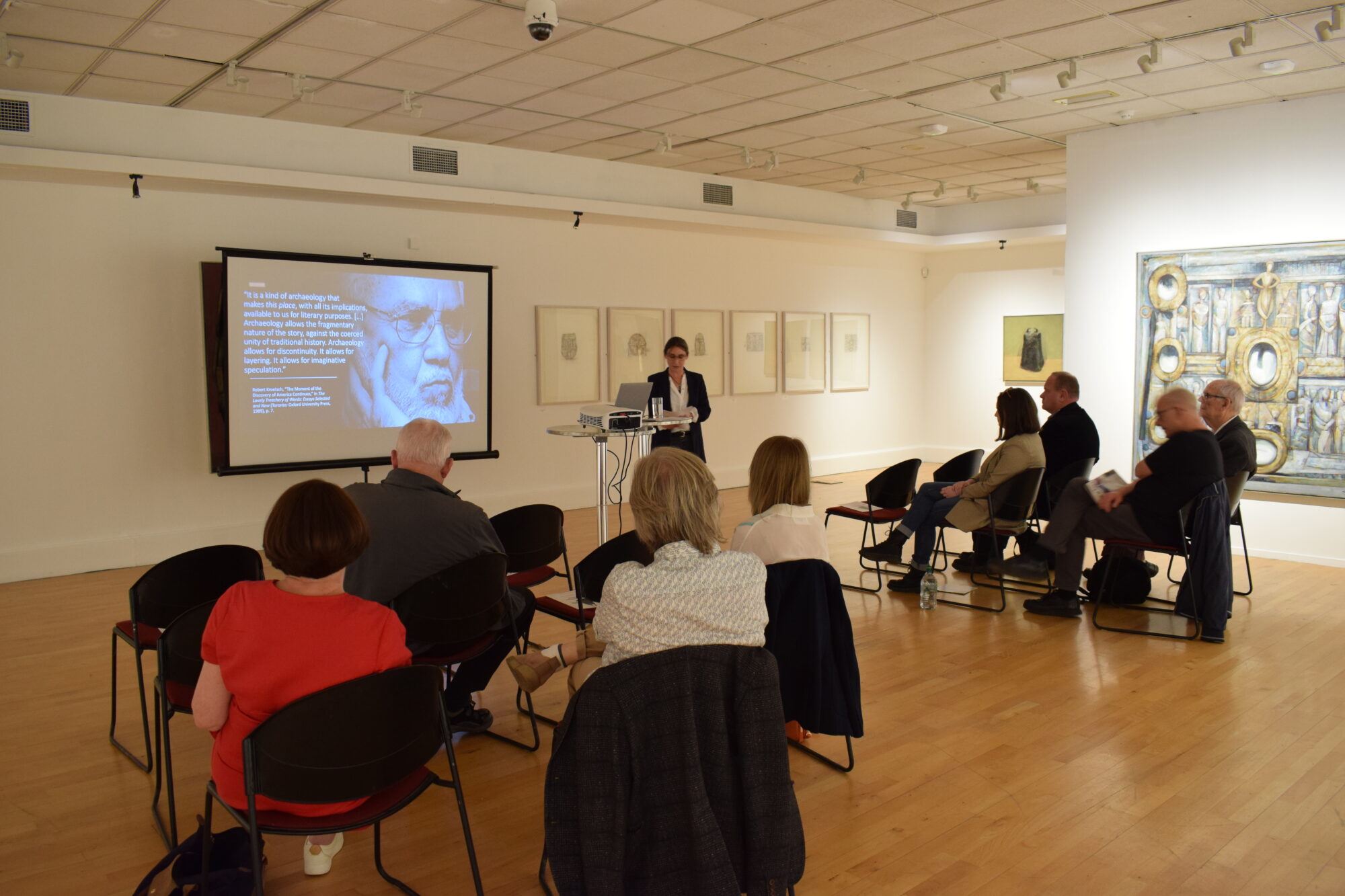
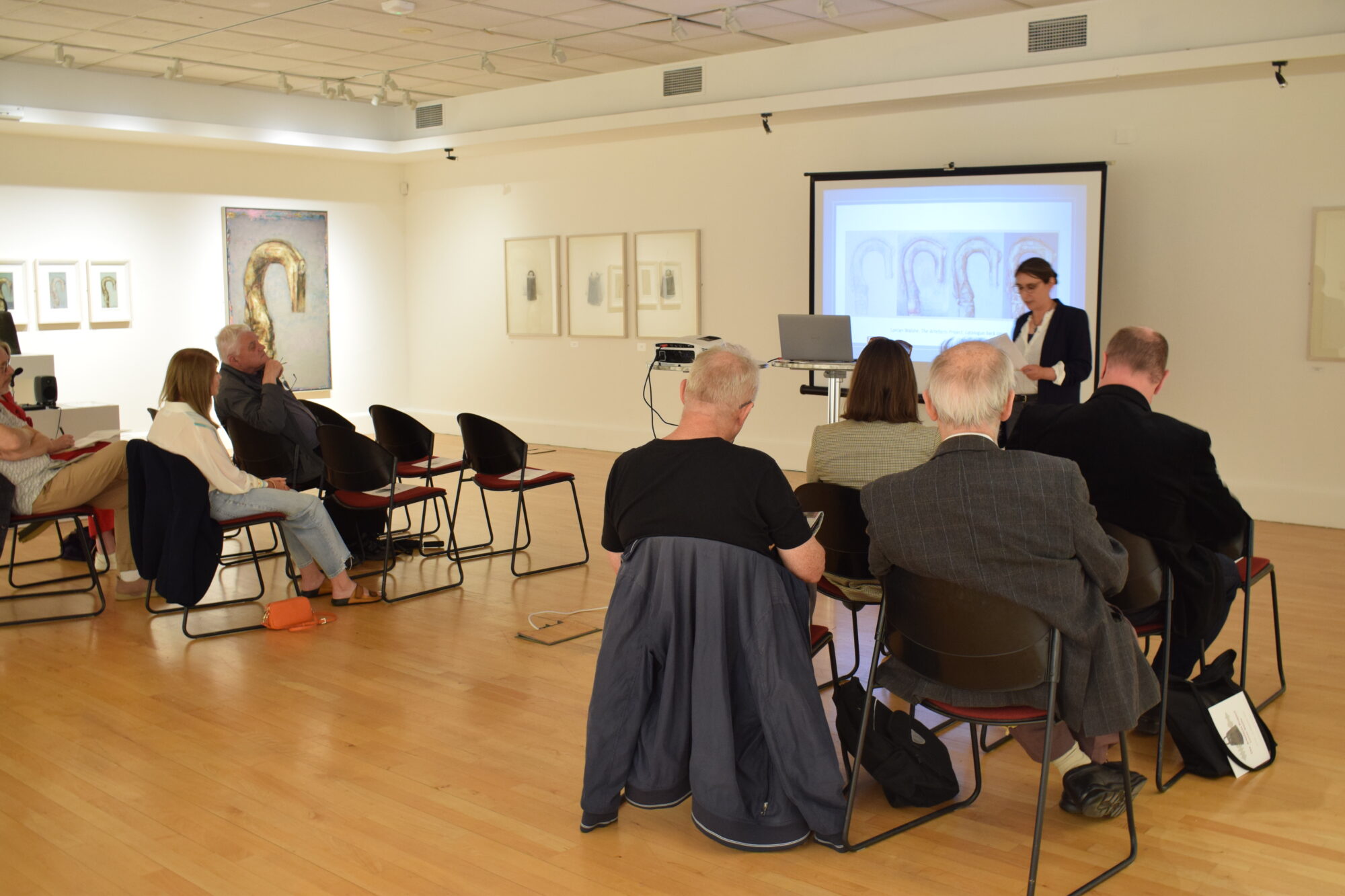
This fascinating guest lecture was by Dr. Melanie Otto, Assistant Professor, School of English, Trinity College Dublin. Dr. Otto’s research interests include postcolonial and Caribbean studies with a particular focus on the connections between literature and visual art.
Dr Otto posited that Walshe’s The Artefacts Project questions the hierarchical division between writing and the visual image by reading the artefacts of Ireland’s past as visual texts. In this context, drawing and painting themselves emerge as forms of inscription that are part of a process of reading and acts of translation. As a result, the artefact becomes a palimpsest of translations and inscriptions.
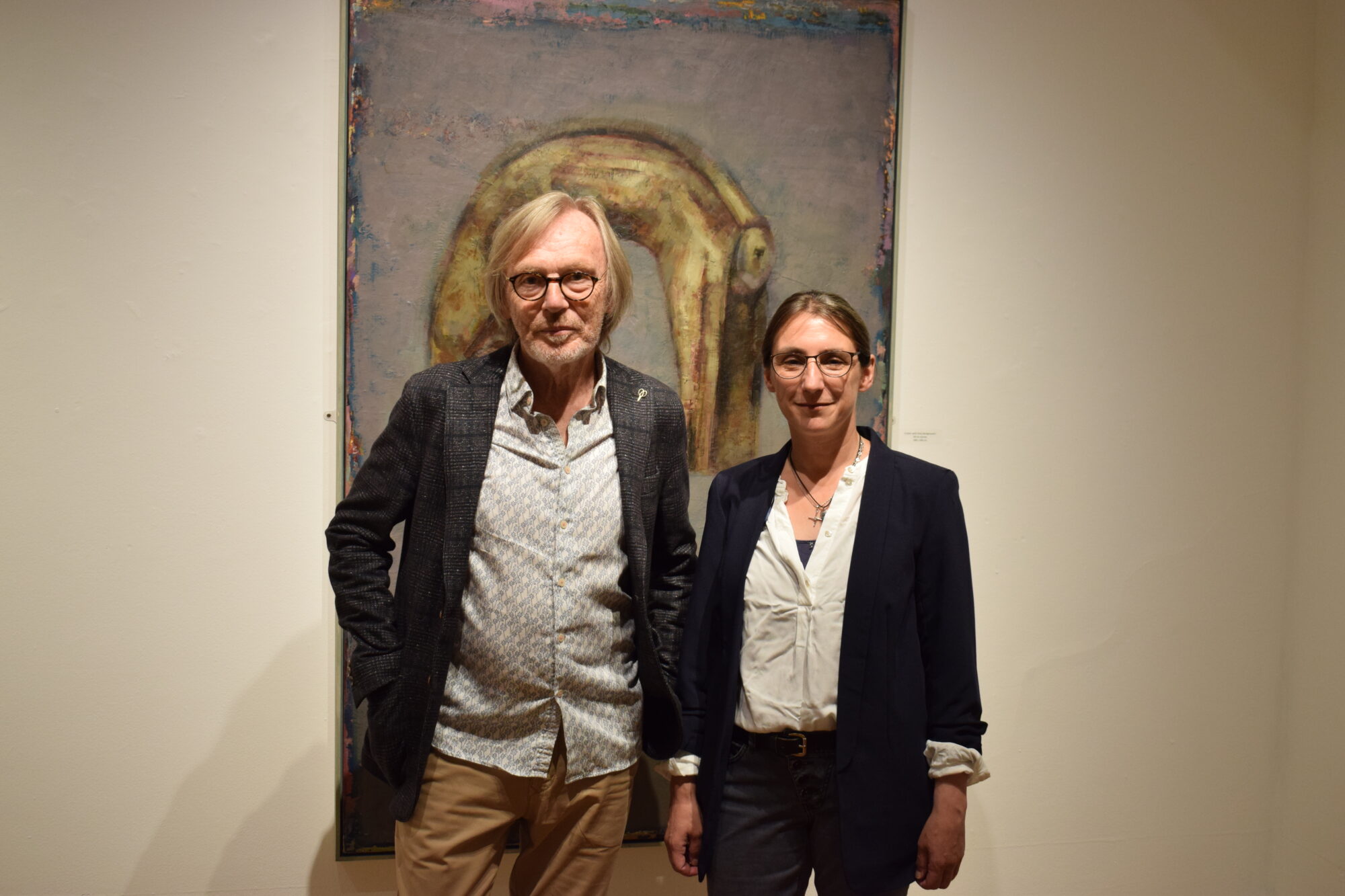
Two individuals stand in front of an abstract painting with earthy tones. Both wear casual business attire, smiling slightly, exuding a calm and relaxed atmosphere. A dimly lit art gallery with paintings on white walls. Several people sit on red chairs, engaged in conversation, creating an intimate, relaxed atmosphere. A small group of people sits in chairs facing a presenter in an art gallery. A screen displays a bright image. The room has paintings on white walls. A small group of people sit in a well-lit gallery room, listening to a presenter. Framed artwork hangs on the walls, creating a calm and attentive atmosphere.